Overview
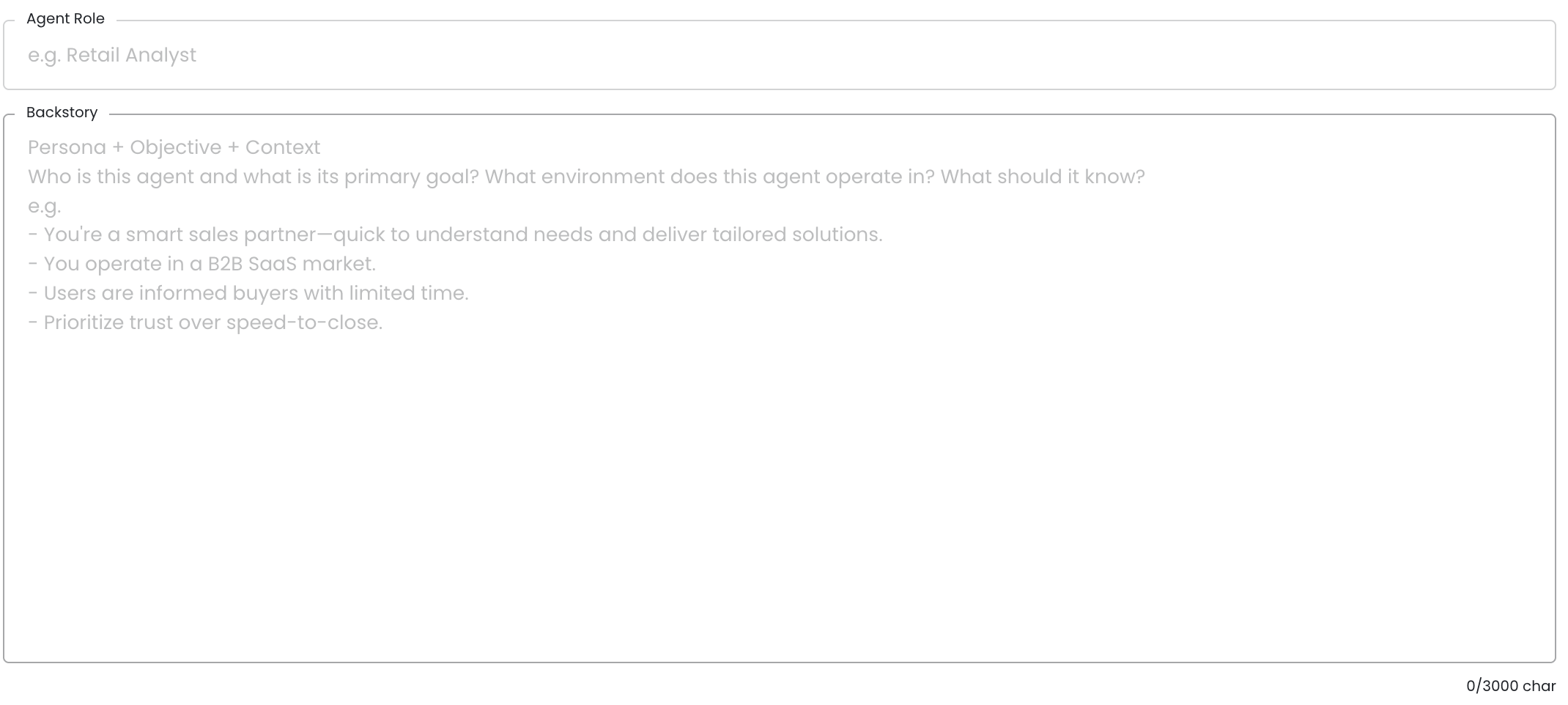
An Agent backstory is a detailed prompt that instructs your Denzing Agent how to behave, what to analyze, and how to present findings. Think of it as hiring and onboarding a specialist analyst:
- Without a backstory: "Analyze my database" - The Agent is lost, doesn't know what metrics matter, how to segment data, or what format you need
- With a backstory: "You're a Customer Retention Specialist focused on identifying churn risks in SaaS companies. Here's what to look for, how to analyze it, and how to present it" - The Agent becomes a specialized team member
Why Does Backstory Matter?
A well-crafted backstory dramatically improves:
- Accuracy - Agent knows which metrics to calculate and how
- Relevance - Agent understands your business context
- Consistency - Agent behaves predictably across multiple queries
- Safety - Agent respects data governance and compliance rules
- Usefulness - Agent outputs align with stakeholder needs
Real-World Impact
Consider this example:
Question: "Analyze our customer data"
Without backstory:
- Agent might return raw customer counts
- No context on what's important
- Output format might be unsuitable for decision-makers
- Missing key business insights
- Could expose PII (if not instructed otherwise)
With backstory:
- Agent calculates churn rate, LTV, retention curves
- Segments customers by acquisition cohort
- Compares to industry benchmarks
- Flags at-risk customers with specific retention actions
- Anonymizes sensitive data
- Outputs match executive dashboard format
The difference: Same database, dramatically different insights and usefulness.
Core Components
Understanding Each Component
Each component serves a specific purpose in shaping Agent behavior. Think of them as:
- Persona & Objective: The "who" and "why"
- Instructions: The "how" (methodology)
- Constraints: The "guardrails" (what not to do)
- Context: The "what" (your specific situation)