Create an Agent
1. Details
Agent Name
Here, you can assign a custom name to your Agent based on the functionality or whatever suits your team's needs best. Names cannot start with a number. Best practice is to use a descriptive name that is specific, so the Agent's function is easily identifiable to users. For example, a marketing team may have several Agents. Agent names could be Marketing Budget Agent, Marketing Analytics Agent, Marketing Ads Agent, and so on.
Description
The description gives users a brief overview of the Agent's functionality. All users will have access to this, giving them visibility on all the Agent's available to them. Think of this like the Agent's bio. Descriptions should be under 255 characters. This does not impact the functionality of your Agent in any way and is optional, but we highly recommend doing this step to avoid confusion.

Data Source
An Agent cannot function without a data source. The data source must be setup prior to the creation of an Agent. To learn how to connect a data source, visit data source page.
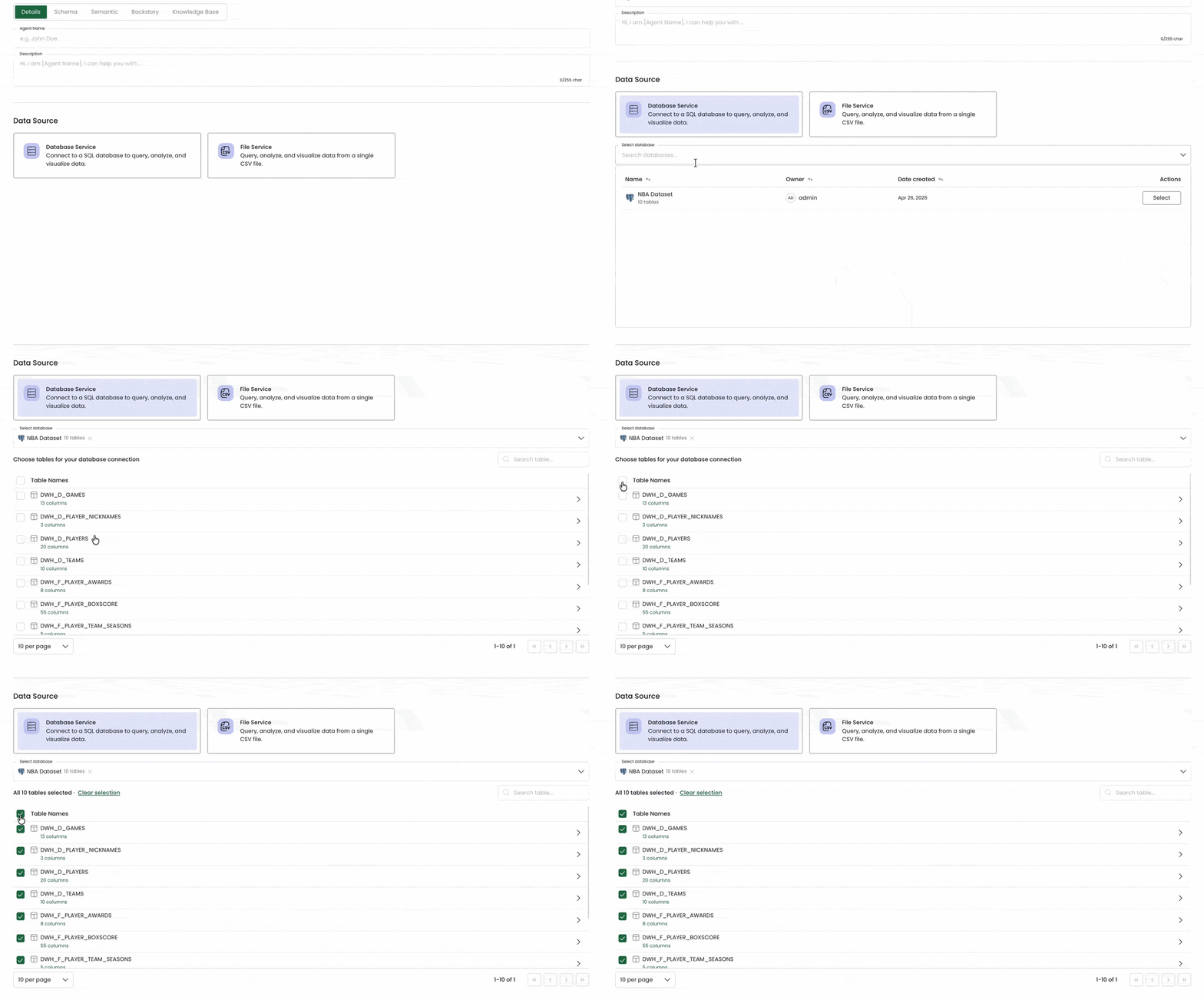
After the data source is setup, it will appear on the Create Agent page. Based on whether you connected to a database or uploaded a file, select the data source. All available data sources will appear in a drop-down menu.
Once you select the database, make sure all the required tables are selected. Click on "Create” to move on to the next step.
2. Schema
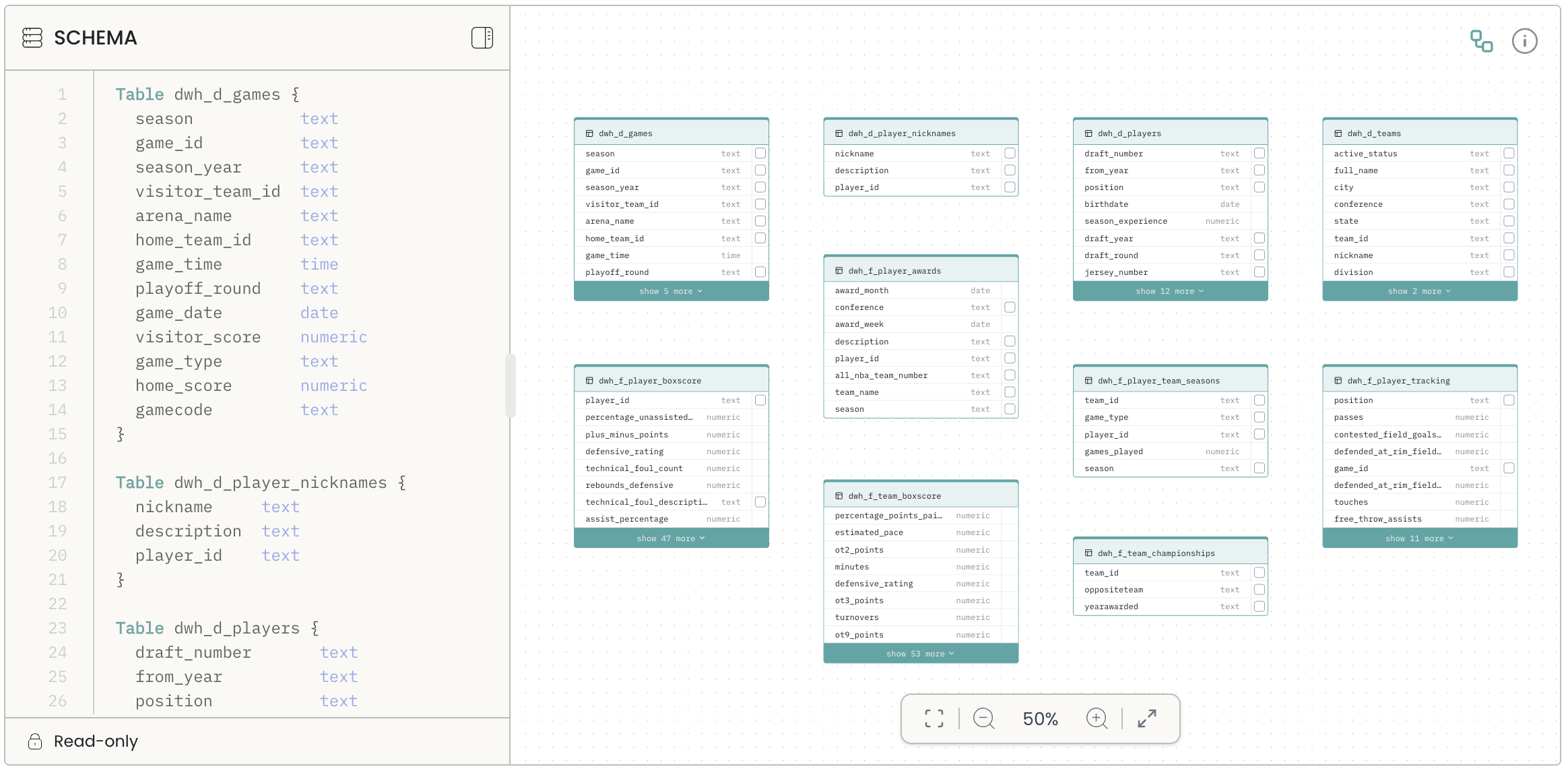
Schema is where users define the structure of your database: which tables exist, what columns they contain, and how they relate to each other. The Schema is automatically generated and can be reviewed. Relationships between tables can be manually established by connecting columns.
For a detailed breakdown of the schema, visit schema page.
3. Semantic
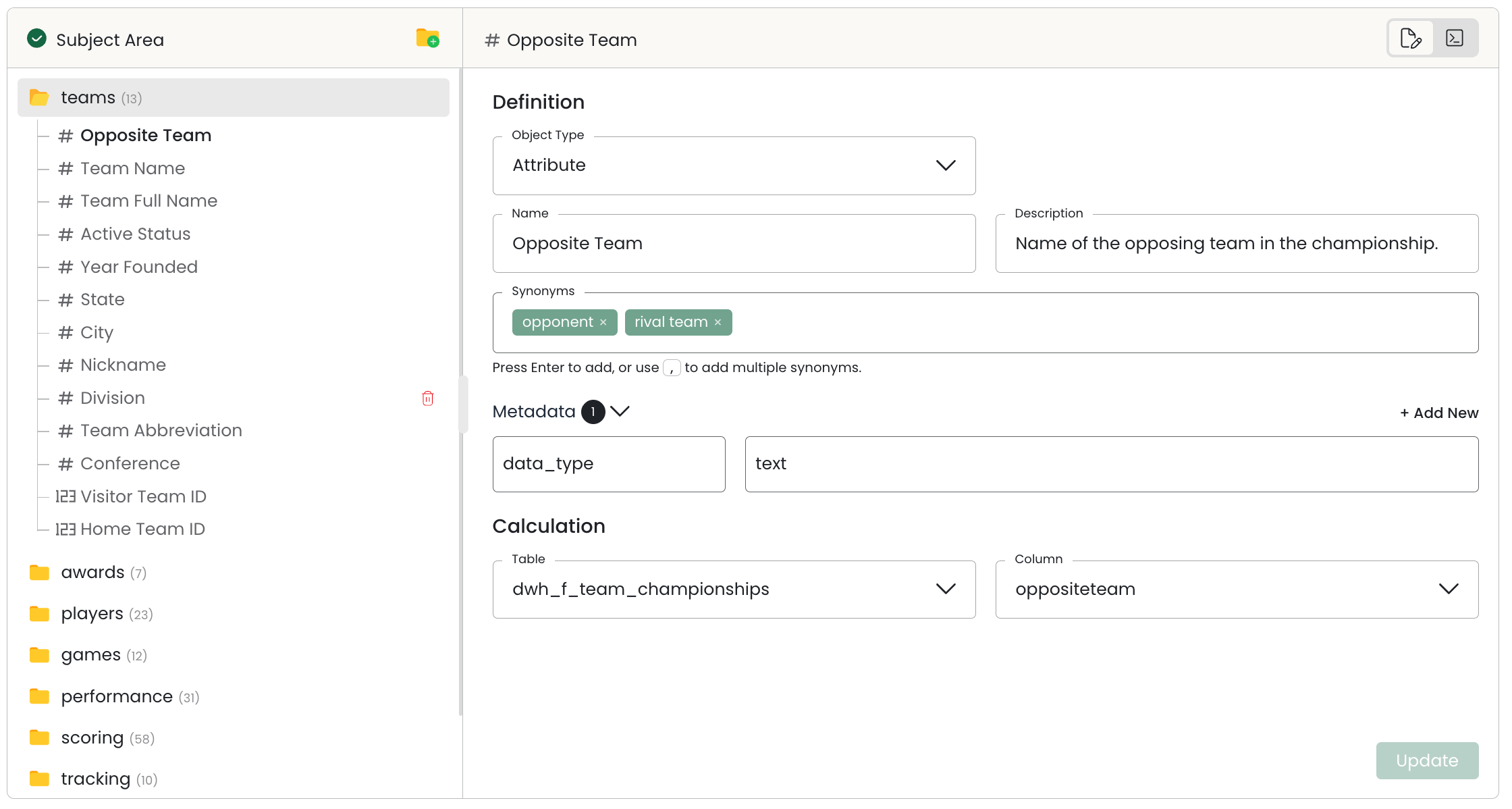
The meaning behind your data lies in the Semantic section. Your organization’s metrics, formulas, and business definitions are stored in the Semantic so that every answer reflects how your company actually measures performance.
This is where key concepts such as attrition rate, active customer, or qualified lead are defined according to your internal logic. By encoding these definitions, the Agent delivers insights are consistent, accurate, and aligned with your business.
For a detailed breakdown of the semantic, visit semantic page.
4. Backstory
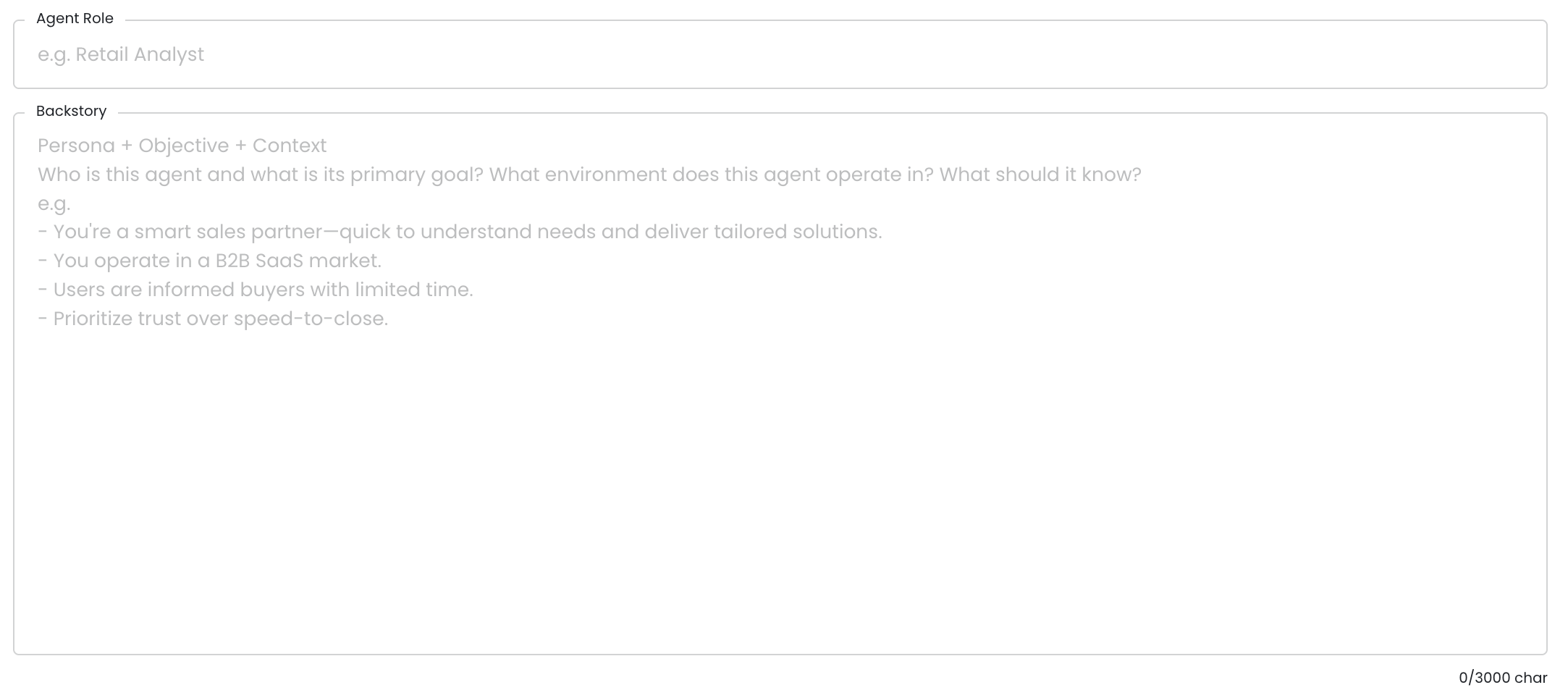
Backstory is where you can customize your Agent with a structured description of your business, department workflows, and how metrics matter. You can shape how your Agent thinks and responds by setting its role, experience, persona, objective, tone, rules, and response style.
For a detailed breakdown of the backstory, visit backstory page.
5. Knowledge Base
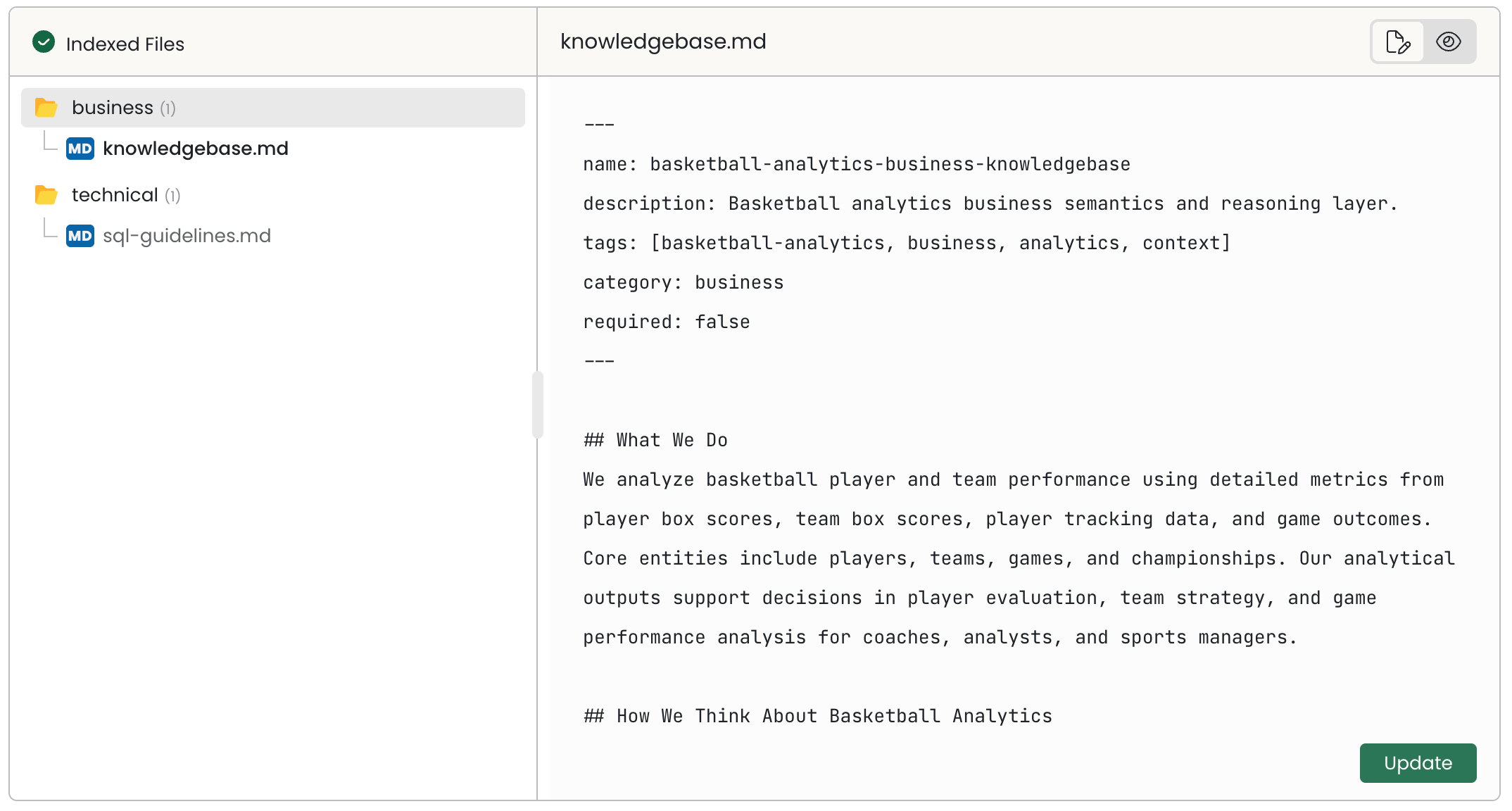
The Knowledge Base is where an Agent learns how your business works. It captures rules, definitions, and context that don’t exist in raw data, enabling the Agent to produce answers that are not just correct, but meaningful. It contains business rules, domain definitions, decision logic, and operational context.
While the Knowledge Base is also automatically generated, the user can manually edit it according to organizational needs.
For a detailed breakdown of the knowledge base, visit knowledge base page.